
My Little Princess : Wizard
My Town Games LtdEducational
3.782.00 Reviews
- Version
- 7.03.02
- Installs
- 100.00K
- Age Rating
- Everyone
Screenshots
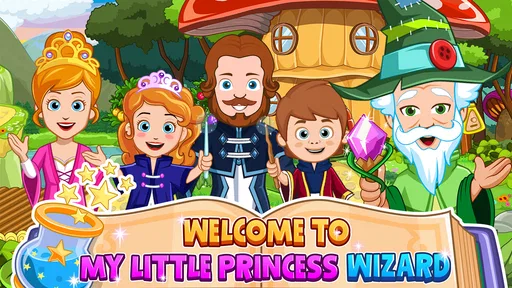
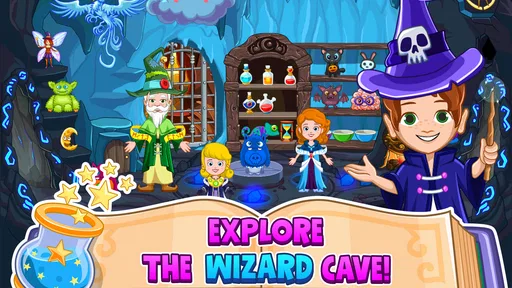
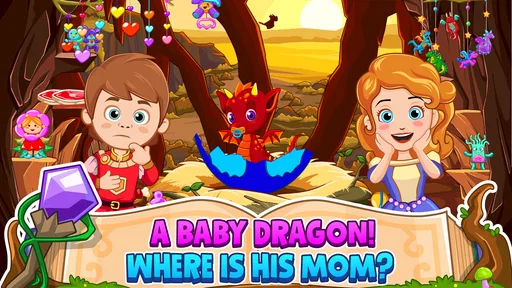
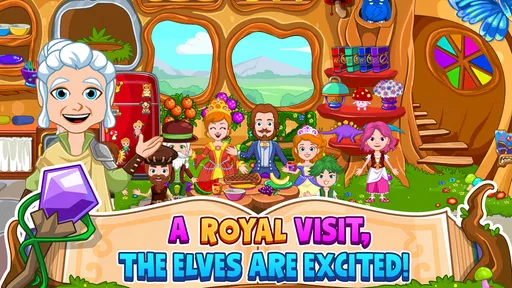
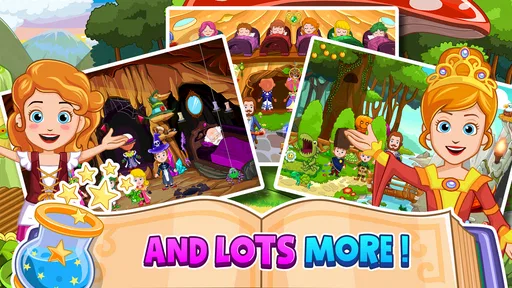
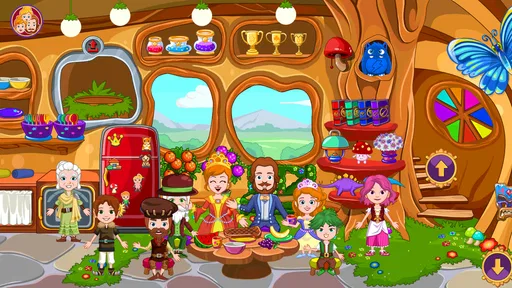

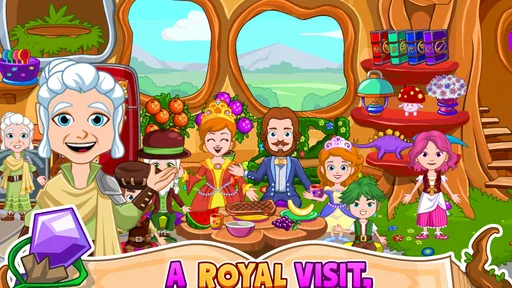
Our Review of My Little Princess : Wizard
 Analysis by Appyee
My first impression of My Little Princess: Wizard was that it works best as a digital playroom rather than a conventional game with a fixed path. I approached it as an educational title, but its real appeal is the freedom to explore, move objects, and create small stories inside a magical setting. That difference matters: children who enjoy pretending and experimenting will probably get more from it than players looking for levels, scores, or a clear victory condition.
The central capability I kept returning to is the castle’s interactive environment. Instead of asking the child to follow a long sequence of instructions, the game invites them to investigate what is around them. The store summary describes a castle where children can interact with almost everything, and in practice that idea shapes the whole experience. The castle becomes a stage for role-play, observation, and simple problem-solving, with the child deciding what to touch and what story to build.
That makes the game feel personal. One child might treat the setting as a wizard’s home, another might turn it into a place for family characters, and a third might simply enjoy moving between rooms and testing objects. I like that there is no pressure to perform perfectly. My Little Princess: Wizard is published by My Town Games Ltd, and it follows the studio’s familiar approach of turning an environment into an open-ended toy.
Why the interactive castle matters more than a traditional objective
In many educational games, the learning is attached to a quiz, matching exercise, puzzle, or reward system. Here, the learning value comes more indirectly from the child’s actions. Exploring a room encourages attention, memory, language, sequencing, and imaginative planning. Those are modest skills, but they appear naturally when a child decides, “First I will prepare the room, then I will find the character, and after that I will make up a story.”
The important distinction is that the game does not need to announce a lesson every minute. A child can practice cause and effect by trying different interactions, develop vocabulary by describing what is happening, and work on social storytelling by assigning roles to characters. I found this more useful when an adult occasionally joined in with questions rather than leaving the child entirely alone with the screen.
The strongest feature is not simply that the castle is interactive; it is that the child controls the meaning of each interaction. A chair can be part of a scene, a room can become a setting for a pretend adventure, and an ordinary action can lead to a conversation. That flexibility is why the game feels closer to imaginative play than to an electronic worksheet.
What the child is really practicing
When I look at the game from a parent’s point of view, I see several useful habits hidden inside the free-form play. The child has to notice details, remember where things are, choose an action, and then decide what to do next. If the child is playing with another person, there is also a chance to negotiate roles and explain ideas.
These benefits should not be overstated. This is not a structured reading course or a mathematics trainer, and I would not choose it when my main goal was measurable practice in a particular school subject. Its educational strength is broader: it supports creative thinking and communication through a magical setting that is easy to understand.
One practical tip improved our sessions: I avoided asking, “What are you supposed to do?” because the game is not built around one correct answer. Questions such as “Who lives here?”, “What happens next?”, or “Can you make a story using this room?” worked much better. They turned passive tapping into a small storytelling exercise without taking control away from the child.
How the open-ended play works in everyday use
The experience is simple to approach. A child can enter the castle, look around, and begin experimenting without first learning a complicated control scheme. That low entry barrier is important for younger players, especially when an adult wants to offer a short activity without spending a long time explaining rules.
I also found that the lack of a strict route can be both a strength and a weakness. It is a strength because children can start with whatever catches their attention. It is a weakness because a child who expects clear goals may ask what to do next and lose interest. The game rewards curiosity, so it helps if the child already enjoys pretend play or if an adult provides a simple starting idea.
A useful workflow is to begin with one small challenge rather than presenting the entire castle as an unlimited space. For example, I would suggest making a bedtime scene, preparing a magical visit, or finding a way to give each character a role. Once the child understands that the setting is a toolkit for stories, exploration becomes more purposeful.
Another non-obvious strength is how well the game can support repeated play without requiring the child to repeat the same level. The setting can be reused with a different story each time. That does not mean every session will feel fresh automatically; the adult or child needs to change the premise. Still, the open format gives the game more replay value than a short sequence of puzzles that can be memorized.
A realistic afternoon example
Imagine a child has finished school and wants screen time while a parent prepares dinner. The game can work as a calm, self-directed activity if the child already understands imaginative play. The parent might suggest one prompt before stepping away: “Make a story about a visitor who needs help in the castle.” The child can then explore, move between spaces, and create a sequence of events.
When the parent returns, the best follow-up is not a technical question about progress. Asking the child to retell the story encourages memory and language, while asking why a character was placed in a particular room invites reasoning. In that situation, the app becomes more than a distraction. It provides material for a short conversation and lets the child show ownership of the activity.
I would not rely on it as an unattended solution for every child, though. Some children need more structure, and others may simply tap around without building a story. The same open design that encourages creativity can feel empty if the player is waiting for instructions.
Where the experience feels polished and where it asks for patience
The castle concept gives the game a clear identity. It is easier to remember than an educational app made from disconnected mini-games, because the child returns to one imaginative world. The setting also makes it natural to play in short sessions. There is no need to complete a long campaign before stopping, which suits families with unpredictable routines.
The age rating is Everyone, and that matches the gentle, accessible presentation I would expect from a family-oriented title. I would still preview the game with the intended child, because age ratings describe broad suitability rather than guaranteeing that every child will enjoy an open-ended format. A younger player may need help understanding how to turn exploration into play, while an older child may find the lack of challenge limiting.
The biggest trade-off is the absence of the usual game pressure. There is no obvious score to beat or competitive target to chase, so children who thrive on achievement systems may prefer a puzzle game with levels and feedback. In contrast, children who become frustrated by failure may appreciate that the castle lets them experiment without losing progress in the traditional sense.
There is also a financial point to consider. The game costs $4.49, and in-app purchases are listed at $0.99 per item. For a family comparing it with free educational downloads, that upfront cost deserves thought. I see more justification for it when the child already enjoys imaginative play and will return to the castle repeatedly. If the child usually abandons sandbox-style games after a few minutes, the purchase may feel less worthwhile.
The store shows an average rating of 3.7 from around 3.1 thousand ratings, with over 100 thousand installs. I read those figures as evidence of an established audience, not as a guarantee that the format will suit every household. The number is useful context, but the deciding question is still whether the child enjoys creating scenes without being told exactly what to accomplish.
Device and version considerations
The current version is 7.03.02, and the game supports Android from version 8.0 onward. That makes it relevant to many older devices, although the practical experience will still depend on the particular phone or tablet. A larger screen is preferable for this kind of play because children need room to see the castle and manipulate elements without accidentally tapping the wrong area.
If the child will play on a shared phone, I would expect the experience to be less comfortable than on a tablet. The interactive environment benefits from visual space, especially when an adult and child are looking at the same scene together. This is a small but meaningful trade-off that a short store description cannot show.
I also recommend treating the game as an activity rather than a guaranteed quiet-time button. Before handing it over, I would decide whether the child should explore freely or follow a story prompt. That preparation takes less than a minute and can make the difference between focused pretend play and aimless tapping.
Who gets the most from this particular kind of game
My Little Princess: Wizard is a strong match for children who like dolls, miniature worlds, role-play, and making up conversations between characters. It is especially appealing when a parent, sibling, or teacher wants to join for a few minutes and turn the castle into a storytelling prompt. The game’s value grows when someone asks the child to explain choices rather than simply watching the screen.
It can also suit families who prefer gentle digital activities over competitive games. Because the child is not pushed toward a timer or leaderboard, the atmosphere is relaxed. That makes it easier to stop after a short scene and return later without the feeling that an unfinished level has been abandoned.
I would be more cautious for children who need explicit instructions, frequent rewards, or academic exercises with visible progress. A phonics app is better for practicing letter sounds. A puzzle game is better for children who want clear problems and solutions. A conventional adventure game is better for players who want missions and a sense of advancement. This title is not trying to replace those alternatives, and it would be a mistake to judge it by their standards.
There is one further trade-off for families with more than one child. Open-ended play can encourage cooperation, but it can also lead to arguments if both children want to control the same scene. A simple arrangement helps: one child creates the setting while the other invents the story, then they swap roles. That turns the flexible design into a shared activity instead of a struggle over the screen.
For adults deciding whether the price is sensible, I would use a practical test. Think about whether the child already spends time inventing stories with toys. If the answer is yes, the castle is likely to extend an existing interest into a digital space. If the child mainly wants fast action, clear rewards, or teacher-like exercises, another educational game will probably offer better value.
My final recommendation after using the castle as a play space
I came away seeing My Little Princess: Wizard as a focused imaginative tool, not a broad educational curriculum. Its best capability is the freedom to interact with a magical castle and reshape it through pretend play. That freedom can support language, planning, observation, and social storytelling, but it works best when the child is given a small prompt or an interested conversation partner.
The limitations are equally clear. The open-ended format may confuse children who want objectives, the educational benefits are indirect, and the paid entry price plus optional $0.99 items makes it worth considering how often the child will return. A small screen can also make the experience less comfortable than a tablet.
Even with those reservations, I would recommend it to families looking for a calm, creative game that does not force competition or failure. My Little Princess: Wizard is most successful when treated like a box of digital props: the child supplies the imagination, and the castle gives that imagination somewhere to happen. If that sounds like the kind of play your child already enjoys, this is a thoughtful choice; if you need structured lessons or a conventional game loop, I would look elsewhere.
Verdict
Strengths of My Little Princess : Wizard
- Creative wizard-themed locations encourage imaginative role-play.
- Simple controls make it accessible for younger children.
- Characters and objects can be freely combined for open-ended stories.
- Colorful visuals are appealing and easy for children to understand.
- Offline play is useful when traveling or away from Wi-Fi.
Limitations of My Little Princess : Wizard
- Some content and features may require additional purchases.
- The open-ended gameplay may feel repetitive after extended play.
- Limited challenge may not satisfy older children seeking complex gameplay.
- Many interactive elements lack clear guidance for first-time players.
- Performance can vary on older devices with limited storage or memory.
Other Releases by My Town Games Ltd
View All
My Town Home: Family Playhouse
Educational4.3

My Town : Beach Picnic
Educational4.0

My Town : Daycare
Educational4.1

My Town : Hospital
Educational4.2
Similar Picks in This Category
View All
Little Panda Policeman
BabyBus4.0

Monster Trucks Game for Kids 2
Raz Games4.1

Little Panda's Chinese Recipes
BabyBus4.4

Little Panda's Restaurant
BabyBus4.4

Little Panda's Ice Cream Games
BabyBus4.3

Baby Panda Care
BabyBus3.8
Frequently Asked Questions
What is My Little Princess: Wizard about?
My Little Princess: Wizard is a child-friendly role-playing and exploration game set in a magical world. Players can visit wizard-themed locations, interact with characters, discover objects, and create their own stories through open-ended play. Instead of following a strict mission structure, the game focuses on imagination, experimentation, and playful exploration, making it suitable for children who enjoy fantasy adventures and creative activities.
Is My Little Princess: Wizard suitable for young children?
The game is designed primarily for children and uses colorful visuals, simple interactions, and an accessible interface. There are no complicated controls or demanding combat mechanics, so younger players can explore at their own pace. Parents should still review the available content and settings before downloading, especially because age suitability can vary depending on the child and the device’s store rating.
Can children play My Little Princess: Wizard without an internet connection?
Many of the game’s exploration and role-playing features can generally be enjoyed offline after the necessary content has been installed. However, internet access may be required for downloading the game, receiving updates, restoring purchases, or accessing certain optional features. Availability can vary between Android and iOS versions, so checking the store description is recommended before relying on the game during travel or without Wi-Fi.
Does My Little Princess: Wizard include in-app purchases or advertisements?
The game may include optional paid content, depending on the version and platform. Some locations, characters, or extra features can be offered as additional purchases, while the core experience may provide a limited selection to explore. Parents should check the device’s parental controls and purchase settings before allowing children to play, since accidental purchases can occur when payment information is already connected.
What can players do inside the wizard world?
Players can explore magical rooms and fantasy locations, interact with different characters, move objects, and use items to invent their own adventures. The emphasis is on creative storytelling rather than winning levels or completing difficult challenges. Children can experiment with the environment, create pretend-play scenarios, and revisit areas to discover new combinations, making the experience more open-ended than a traditional action game.
Play our best games!


